
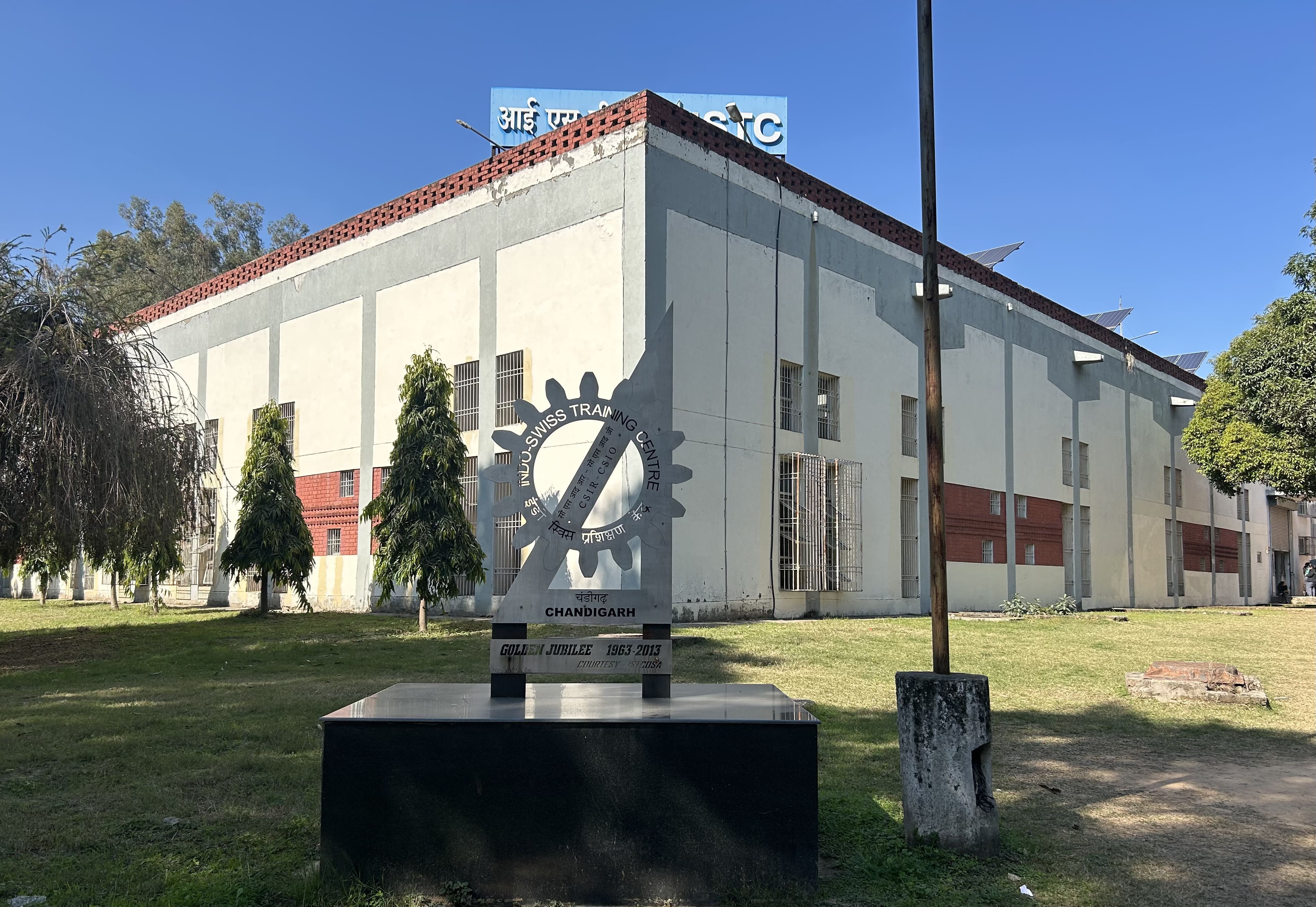
Not every ISTCian wants the placement letter
Every year the ISTC placement season fills this site with offer letters from Maruti, Addverb and the big OEMs, and rightly so. But walk through the industrial areas of Mohali, Ludhiana or Baddi and you will find something else: tool rooms, die shops, small CNC job-work units and electronics assembly benches run by people who trained at the Indo-Swiss Training Centre and decided to build their own.
The trades taught at ISTC, Die and Mould, Tool and Die, Mechatronics, Electronics and Industrial Automation, are among the few diplomas where a graduate can realistically set up a small unit within a few years. Machines are expensive, but government schemes exist precisely to cover that gap. Here is how they fit together in 2026.
Step 1: Udyam registration (free, and do it first)
Udyam is the government's MSME registration. It is free, online and based on your Aadhaar and PAN. Nobody should charge you for it. It matters because almost every scheme and bank product below asks for it, and it gives you legal protection when a buyer delays payment beyond 45 days, which for a job-work unit supplying larger firms is not a small thing.
Since April 2025 a micro enterprise is one with up to ₹2.5 crore invested in plant and machinery and up to ₹10 crore in turnover, so almost every new unit starts as micro.
Step 2: PMEGP for the machines
The Prime Minister's Employment Generation Programme (PMEGP) is built for exactly the ISTCian who wants to start a new manufacturing unit.
- Manufacturing projects can cost up to ₹50 lakh; service units up to ₹20 lakh.
- A general category applicant puts in 10% of the project cost and gets a margin money subsidy of 15% (urban) or 25% (rural). The bank lends the rest.
- Special category applicants, which includes all women, put in only 5% and get 25% (urban) or 35% (rural).
- The unit must be new, and only one person per family can get PMEGP.
One caution for 2026: applications run on the PMEGP 2.0 portal, but the scheme's approval ran to 31 March 2026 and further subsidy release depends on the Centre approving its continuation. Check the status before you build your plan around the subsidy.
A clear, current breakdown is in Sakhi Sangini's guide to PMEGP: the 35% subsidy, limits and how to apply. The same site has a worked guide on writing a project report for a bank loan, which is the document most first time applicants get wrong.
Step 3: Mudra and CGTMSE for working capital and growth
- PM Mudra Yojana gives collateral free loans in four bands: Shishu up to ₹50,000, Kishor up to ₹5 lakh, Tarun up to ₹10 lakh, and Tarun Plus from ₹10 lakh to ₹20 lakh for borrowers who have repaid a Tarun loan. Useful for tooling, inserts, a second machine or working capital.
- CGTMSE does not lend money. It guarantees bank loans to micro and small enterprises up to ₹10 crore without collateral, which is what lets a bank lend to a young unit owner with no property to pledge. For women owned businesses the guarantee covers 90% of the amount in default.
What a first unit can look like
- A tool room or die shop doing job work for the auto and appliance clusters, starting with one VMC and building from there.
- A mechatronics or automation service unit doing panel wiring, PLC programming and machine retrofits for local factories.
- An electronics unit doing PCB assembly, testing or repair for OEMs and startups in the Tricity.
- A 3D printing and prototyping studio serving product startups and colleges.
Start with one paying customer before you buy the second machine. Your ISTC classmates working inside those OEMs are your first sales channel; ISTCKonnect exists partly so you can find them.
For ISTC's women alumni
Women are a growing share of every ISTC batch, and the schemes above treat them better than most people realise. Under PMEGP a woman qualifies for the special category on gender alone. Under CGTMSE the guarantee cover is higher.
If you make a product rather than offer a service, there is also an easier route to your first customers than a factory gate. Sakhi Sangini, a women's enterprise platform from the same Fidus group as ISTCKonnect, lets founders open their own store on Sakhi Sangini: payments are handled online and customers get WhatsApp updates at every step, while the founder makes and ships the product. Its full library of plain language guides for women founders covers funding, compliance, export and disputes.
And if someone in your family has just collected her diploma at convocation and is already talking about starting up, the Founder Collection of tees, mugs and totes ("Founder. Maker. Builder.") is a better gift than another pen set.
A checklist before you quit the job
- Register on Udyam.
- Write a one page plan: machine, first customer, monthly cost, break even.
- Check PMEGP status, then talk to two banks with your project report.
- Ask an ISTC senior who has done it. Post in the ISTCKonnect business section; someone will answer.
ISTCKonnect and Sakhi Sangini are both part of Fidus Synergies. Scheme figures are as of October 2026; confirm current terms on the official portals before applying.