Look at the chair you are sitting on. The phone in your hand. The water bottle on your desk. The dashboard of your car. Every plastic component, every pressed metal part, every rubber seal — every one of them was shaped inside a die or a mould before it reached you.
The die or mould is made first. Then everything else follows from it.
Die and Mould Making is the engineering trade that nobody talks about and that nobody can do without. Every manufacturing industry — automotive, electronics, medical devices, consumer goods, aerospace, packaging — depends on precision dies and moulds to produce its products at scale. A car has over 30,000 parts. Most of them were shaped in a mould or a die. When a manufacturer launches a new product, before a single unit reaches a customer, someone built the tool that will produce millions of units.
That someone is a Die and Mould engineer.
What the work actually involves
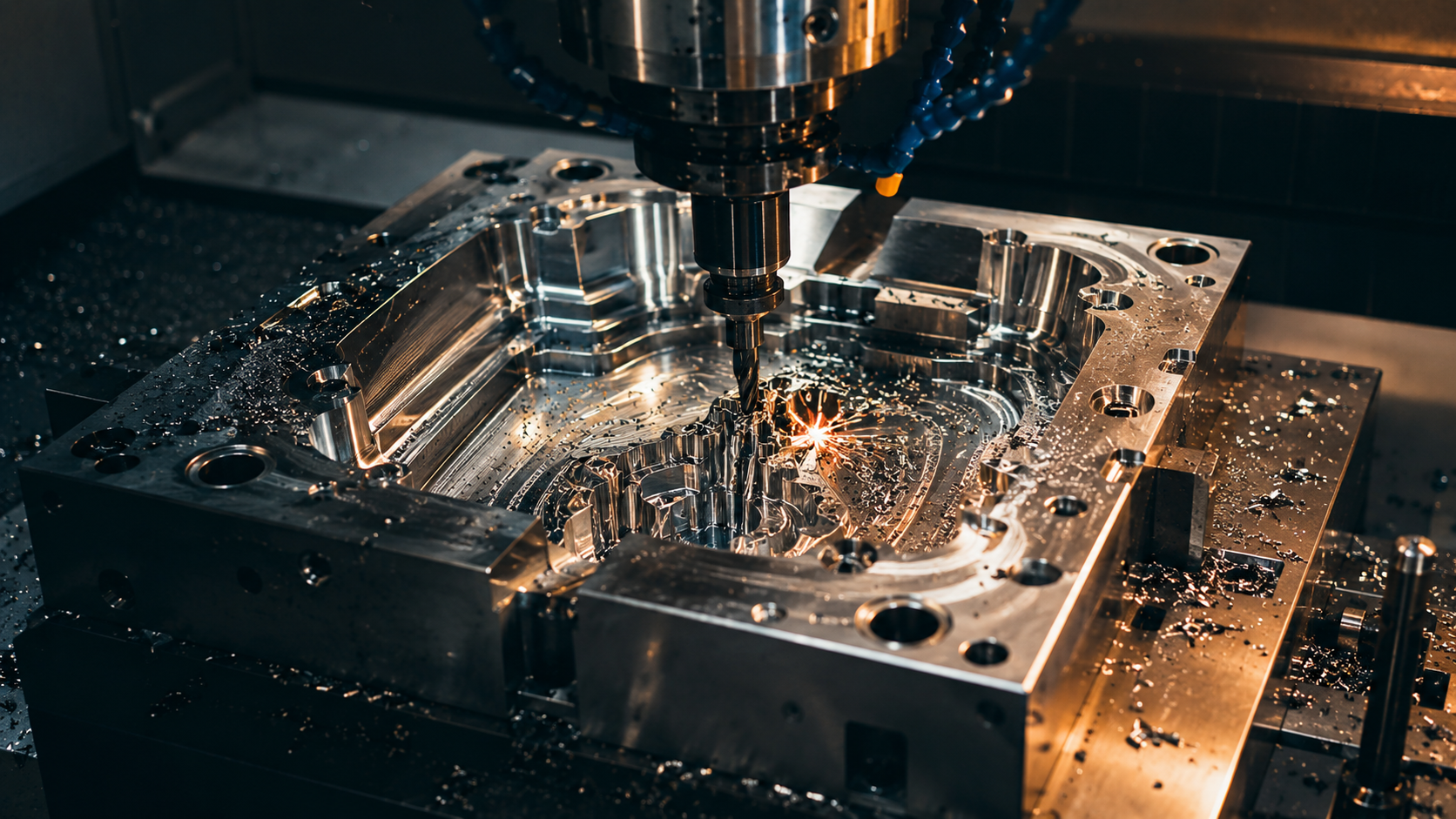
A die is a tool used to cut or shape metal — in stamping presses, forging operations, and sheet metal forming. A mould is a cavity that shapes material — plastic, rubber, aluminium — when the material is injected or pressed into it and allowed to set. Die and Mould engineers design, machine, assemble, test, and refine these tools.
The work sits at the intersection of precision machining, materials engineering, and design. A mould cavity might need to be machined to a tolerance of 0.01 millimetres — the width of a human hair. The surface finish inside a mould determines the surface finish of every product it makes. A mould designed for a medical device operates under different constraints than one designed for an automotive component, and both demand engineering judgement that only comes from genuine hands-on training.
The tools used include CNC milling machines, EDM (Electrical Discharge Machining) equipment, surface grinding machines, lathes, and CAD/CAM software for design and programming. A skilled Die and Mould engineer can work across all of these — designing in CAD, programming the tool paths, running the machines, inspecting the output, and making the adjustments that turn a rough tool into a precision instrument.
The ISTC programme
ISTC Chandigarh offers an Advanced Diploma in Die and Mould Making — a four-year programme across eight semesters, admitting 30 students per year. The programme was built on Swiss precision engineering principles, which matters more in Die and Mould than in most other engineering trades: Switzerland is one of the global centres of precision tooling. The methods, the standards, and the expectations built into the ISTC curriculum reflect that heritage.
Four years is intentional. Die and Mould Making cannot be compressed. The precision required — and the judgement required to achieve it — develops through repeated exposure to real tools, real machines, and real problems. By the end of the programme, an ISTC graduate has designed, machined, and assembled working tools. They have not simulated the work. They have done it.
The programme covers:
- Precision machining — CNC milling, turning, grinding, EDM
- Tool and die design — CAD software, die design principles, tolerance and fit
- Mould design — injection mould design, gate and runner systems, cooling channel design
- Materials engineering — tool steels, heat treatment, surface coatings
- Metrology — precision measurement, CMM (Coordinate Measuring Machine) operation, quality inspection
- CAD/CAM — computer-aided design and manufacturing, CNC programming, simulation
Where Die and Mould engineers work
Every major manufacturing sector in India employs Die and Mould engineers. The automotive industry — which has the largest concentration of tool rooms in the country — is the biggest employer. Every new vehicle model requires hundreds of new dies and moulds. Every component redesign requires a new tool. Maruti Suzuki, Tata Motors, Bajaj, Hero, and the entire network of Tier 1 and Tier 2 automotive suppliers run tool rooms that are always hiring.
The plastics industry is the second major employer. India manufactures enormous quantities of plastic components for electronics, packaging, medical devices, and consumer goods. Every injection mould that produces those components was designed and built by a Die and Mould engineer.
Medical device manufacturing is a growing sector. Surgical instruments, diagnostic device components, pharmaceutical packaging — all of these require precision moulds that meet strict quality standards. Die and Mould engineers who work in this sector command significant premium because the quality demands are unforgiving.
Entry-level salaries for Die and Mould engineers in India typically range from ₹3.5 to ₹6 LPA, depending on the company and location. With 3-5 years of experience in a precision tool room, the range moves to ₹8-15 LPA. Senior tool room managers and specialist EDM or CAD/CAM engineers can earn ₹18 LPA and above. The skill is scarce enough that experienced Die and Mould engineers are consistently headhunted.
Why this trade is harder to learn than most
Die and Mould Making is not taught effectively through lectures. The precision involved — and the ability to diagnose and correct problems in a tool — comes only from working with actual machines, actual materials, and actual tolerances. A student who has only studied the theory of EDM machining cannot set up and run an EDM machine correctly. A student who has machined hundreds of components can.
This is why the ISTC training model — workshop first — is particularly well-suited to this trade. The four years of hands-on work at ISTC produce graduates who can join a tool room and contribute from the first month. For manufacturers, this is the difference between hiring someone who needs two years of on-the-job training before they are productive, and hiring someone who arrives already capable.
30 seats. Four years. The work that makes everything else possible.
👉 Advanced Diploma in Die and Mould Making — course details
👉 ISTC Entrance Exam Result 2026 — merit list and counselling schedule
👉 ISTC Admissions 2026-27 — eligibility, fees, selection process
ISTC Chandigarh: CSIR-CSIO, Sector 30-C, Chandigarh 160030 | 0172-2672484 | istc.ac.in